
Thyroid Cancer Recurrence: Risk by Tumor Type and Surveillance Technique
Written by John P. Sabra, MD FACS
Updated September 2026
Educational only. This article is not medical advice. Always consult your physician about your individual situation.
Recurrence is the word most patients with thyroid cancer fear most after the initial diagnosis. Recurrence does happen, and the rate depends substantially on the type and stage of the original cancer. Most recurrences in differentiated thyroid cancer are caught early, treated effectively, and do not threaten long-term survival. Understanding what recurrence actually looks like, and what surveillance is designed to catch, makes the years after treatment less anxious.
Thyroid cancer recurrence means the cancer has returned after initial treatment. It does not mean the cancer was treated incompletely at the initial surgery.
Microscopic cancer cells can survive even a technically excellent operation and become detectable later as a small lymph node or, less commonly, as residual tissue at the surgical site. In differentiated thyroid cancers, recurrence usually appears in the central or lateral neck lymph nodes, less often at the thyroid bed, and rarely at distant sites.
The most important distinction in thyroid cancer is between recurrence and survival. In most cancers, recurrence is closely linked to mortality. In differentiated thyroid cancer, recurrence and mortality are loosely coupled. You can have one or even multiple recurrences over decades and still have an excellent long-term survival. The surveillance system is designed to identify recurrence early, when it is most treatable, not because every recurrence threatens life, but because earlier treatment is consistently better than later treatment.
Recurrence Rates by Cancer Type and Risk Category
| Cancer Profile | Approximate 10-Year Recurrence Risk |
|---|---|
| ATA low-risk papillary cancer | Under 5%. |
| ATA intermediate-risk papillary cancer | Approximately 6 to 20%. |
| ATA high-risk papillary cancer | Greater than 20%, sometimes much higher. |
| Minimally invasive follicular carcinoma | Under 5% with appropriate treatment. |
| Widely invasive follicular carcinoma | Approximately 30 to 40%. |
| Medullary thyroid cancer, node-negative | Under 10% with complete initial surgery. |
| Medullary thyroid cancer, node-positive | 40 to 60% biochemically. |
Where Recurrences Most Often Occur
In differentiated thyroid cancer, the most common sites of recurrence are predictable. Knowing where recurrences happen most often is the basis for designing the surveillance program.
-
Central neck lymph nodes: The most common site. Approximately 60 to 70% of papillary thyroid cancer recurrences appear in central neck nodes.
-
Lateral neck lymph nodes: The second most common site. Detected by ultrasound surveillance of the lateral neck.
-
Thyroid bed: The area where the thyroid used to be after total thyroidectomy. Recurrences here are less common but possible, especially after incomplete initial surgery.
-
Distant sites: Lungs are the most common distant site, followed by bones. Distant recurrence is uncommon in differentiated thyroid cancer overall.
⚕ Clinical note: Most thyroid cancer recurrences are detected by a combination of a rising thyroglobulin level on a blood test and a suspicious finding seen on neck ultrasound. Most patients with a recurrence have no clinical symptoms. The recurrence is found because good surveillance is being performed.
How Recurrences Are Found
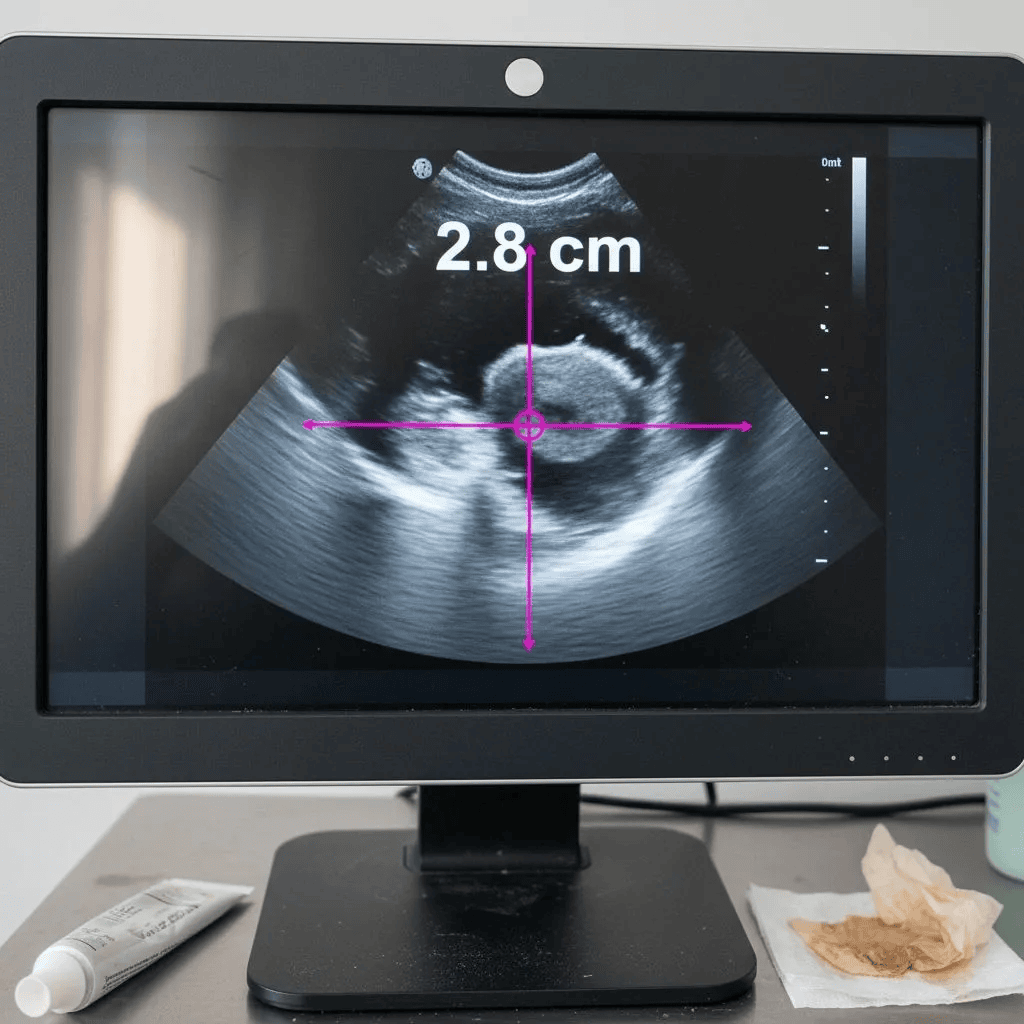
The surveillance program for differentiated thyroid cancer is built around two main components: serum thyroglobulin and neck ultrasound. For patients who have had a total thyroidectomy, any measurable thyroglobulin in the blood signals that some thyroid cells remain, somewhere. A rising thyroglobulin over time prompts investigation. Most often, the source is identified by ultrasound of the neck.
For patients who have had lobectomy only, thyroglobulin cannot be used as a surveillance marker because the remaining thyroid lobe continues to produce it. Surveillance in these patients relies primarily on ultrasound of the remaining thyroid lobe and the lymph nodes of the neck, along with thyroid function tests.
For medullary thyroid cancer, the surveillance marker is calcitonin (along with CEA), not thyroglobulin. The principle is the same: a rising tumor marker over time prompts imaging to localize the recurrence.
Treatment of Recurrence
The treatment of a recurrence depends on what kind of recurrence is present, where it is located, and your overall situation.
-
Discrete neck lymph node recurrence: Surgical removal is the standard approach. The procedure is a focused dissection of the affected nodal compartment rather than a full revision operation.
-
Diffuse or unresectable neck recurrence: External beam radiation may be considered when surgery is not feasible or has been exhausted.
-
Iodine-avid distant recurrence: Radioactive iodine therapy is often effective for differentiated cancers that still absorb iodine.
-
Iodine-refractory distant recurrence: Targeted therapy with tyrosine kinase inhibitors becomes the standard approach.
-
Biochemical recurrence with no detectable disease: Surveillance often continues without immediate treatment when imaging cannot find the source of a rising tumor marker.
⚕ Clinical note: A rising thyroglobulin without a localizable source is a common and stressful situation. The clinical term is biochemical recurrence. Many such patients do well with continued surveillance and never develop visible disease. Treatment is not always indicated at the moment of detection, even when a number is rising. The decision is individualized and depends on the rate of rise and your history.
What Reduces the Risk of Recurrence
Several factors are associated with a lower risk of recurrence, and some are partially within your control.
-
Complete initial surgery: The quality of the first operation is the single most important factor. A complete and meticulous operation by a high-volume surgeon is the strongest predictor of long-term disease control.
-
Appropriate use of radioactive iodine: For patients with intermediate or high-risk disease, radioactive iodine reduces recurrence risk. For low-risk disease, it does not.
-
Adherence to TSH suppression: For patients with a cancer history, taking levothyroxine hormone replacement medication consistently to maintain the recommended TSH range is part of cancer treatment, not just hormone replacement.
-
Active engagement in surveillance: Showing up for follow-up appointments and labs catches recurrences earlier than waiting for symptoms.
The Bottom Line
Thyroid cancer recurrence is something to watch for, not something to live in fear of. The risk varies substantially by cancer type and stage, most recurrences happen in neck lymph nodes and are detected on routine surveillance, and effective treatment is available in most cases. Long-term survival for patients with differentiated thyroid cancer remains excellent even when recurrence occurs.
Confirm with your team what your specific surveillance schedule is, including the frequency of thyroglobulin or calcitonin testing and neck ultrasound, and keep those appointments consistently.
This article is intended for patient education only. It does not constitute medical advice and does not replace a consultation with your physician. Individual patient circumstances and clinical judgment determine the appropriate evaluation and management for every patient.
More from the Thyroid Cancer series



Ready to Talk to a Specialist?
A thyroid specialist can review your specific results, answer your questions, and help you understand exactly what your next steps should be. The ATLAS network connects you with experienced thyroid and parathyroid expert physicians who focus on thyroid disease.
Find a Thyroid Specialist Near You →