
Thyroid Cancer Follow-Up: Year 1, Year 2, and Year 5 Roadmap
Written by John P. Sabra, MD FACS
Updated September 2026
Educational only. This article is not medical advice. Always consult your physician about your individual situation.
After thyroid cancer surgery, most patients want to know one thing: what happens next? Follow-up is a structured, predictable process. The visits become less frequent over time, and for the great majority of patients the only finding at each visit will be a stable picture. Knowing the roadmap in advance makes the post-treatment years substantially less anxious.
Thyroid cancer surveillance is built on the recognition that recurrence, when it happens, usually appears in the neck and usually develops slowly. The schedule of follow-up visits is designed to detect any recurrence at its earliest possible moment, when treatment is most likely to be effective. The general principle is more frequent visits in the first two years, gradually spacing out toward annual visits over time. The specific schedule depends on the cancer type, the stage, and the cancer risk category.
Year 1: The Foundation Year
The first year after thyroid cancer surgery is the most intensive in terms of follow-up. Several distinct events occur during this period: initial recovery, optimization of thyroid hormone replacement, the first formal surveillance assessment, and (for some patients) radioactive iodine therapy.
-
6 to 8 weeks after surgery: First post-operative thyroid function tests. Levothyroxine dose is adjusted based on TSH.
-
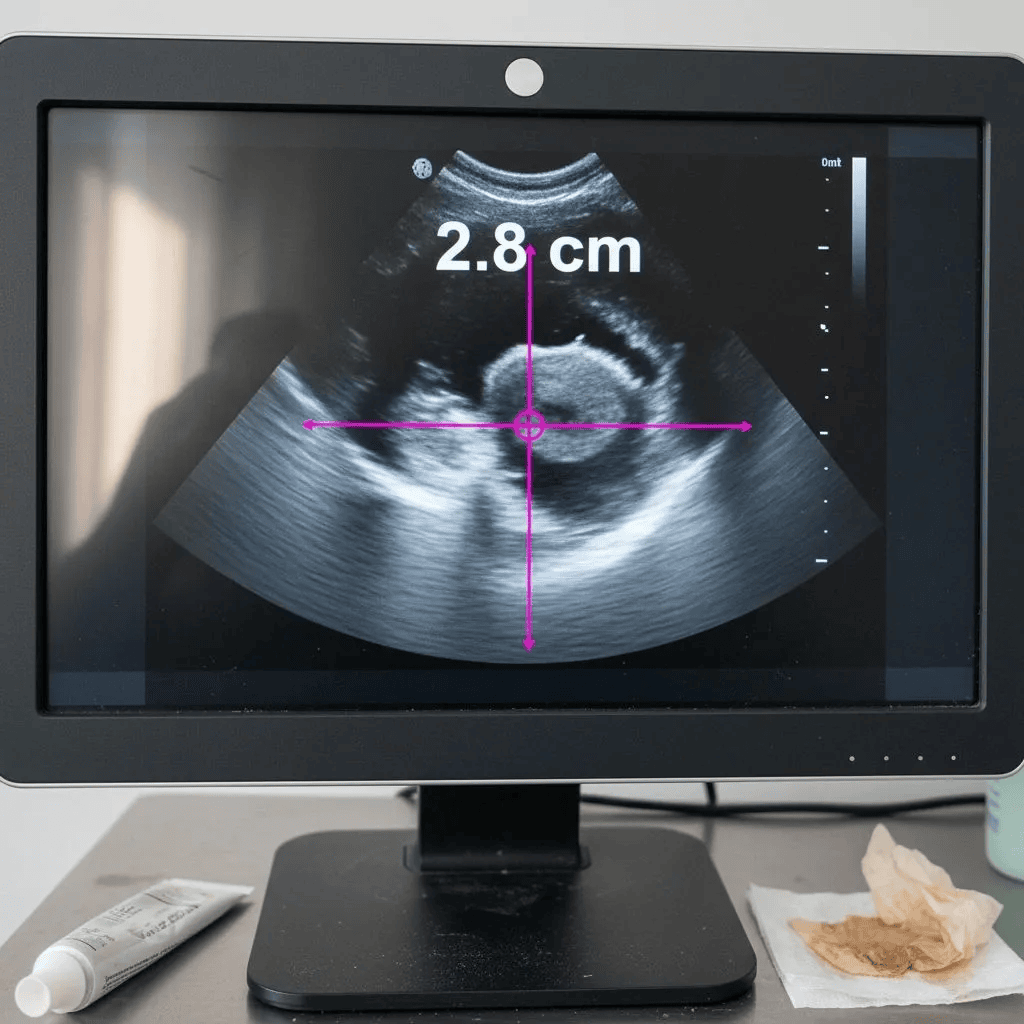
3 months after surgery: Initial thyroglobulin and thyroglobulin antibody, neck ultrasound. For patients receiving radioactive iodine, this is around the time of treatment.
-
6 to 12 months after surgery: Formal first surveillance visit. Thyroid function, thyroglobulin, thyroglobulin antibodies, and a careful neck ultrasound. This visit determines your response to therapy.
-
The 6-to-12 month visit is very important. It establishes whether you have an excellent response (undetectable thyroglobulin, no imaging findings), an indeterminate response (low detectable thyroglobulin, no imaging findings), an incomplete biochemical response (rising thyroglobulin), or a structural recurrence (visible disease on imaging). The category determines how aggressive the rest of follow-up needs to be.
⚕ Clinical note: Approximately 80 to 85% of patients with low-risk papillary thyroid cancer fall into the excellent response category at the first 12-month visit. For these patients, surveillance can often be spaced out earlier than for patients with higher-risk disease. The first follow-up visit is therefore not just a check-in. It is the recalibration point for the rest of the surveillance plan.
Years 2 Through 5: Established Surveillance
From the 1-year visit forward, surveillance follows a more standard rhythm. The specific frequency depends on the response category established at the first year.
| Response Category | Years 2-5 Schedule |
|---|---|
| Excellent response | Annual labs and ultrasound through year 5, then less often. |
| Indeterminate response | Every 6 to 12 months until the trend is established. |
| Biochemical incomplete | Every 6 months. Additional imaging when warranted. |
| Structural incomplete | Every 3 to 6 months with an active management plan. |
Each visit during this period typically includes a focused interval history, a physical examination of the neck, thyroid function tests, thyroglobulin and thyroglobulin antibody (after total thyroidectomy), and a neck ultrasound. Most patients see their endocrinologist for these visits, with referral back to the surgeon if a suspicious finding emerges.
Beyond Year 5
Patients who have maintained an excellent response through five years generally transition to annual visits. The intensity of surveillance decreases, but the principle does not change. Thyroid function, thyroglobulin or the appropriate marker, and periodic ultrasound continue.
Late recurrences of papillary thyroid cancer can occur 10 or even 20 years after the initial diagnosis. This is uncommon but not negligible, and it is why follow-up rarely ends entirely for patients with a prior cancer history. Most patients who reach this point shift to once-yearly visits with their endocrinologist, indefinitely, with intermittent ultrasound surveillance.
⚕ Clinical note: Patients who have had lobectomy alone for low-risk thyroid cancer follow a slightly different schedule. Thyroglobulin is not a reliable surveillance marker in this group because the remaining thyroid lobe continues to produce it. Surveillance relies on neck ultrasound of the remaining lobe and the nodes, along with thyroid function tests. The visit frequency is similar to other low-risk patients.
Medullary Thyroid Cancer Follow-Up
The surveillance program for medullary thyroid cancer uses calcitonin and CEA as the primary tumor markers rather than thyroglobulin. The follow-up cadence is similar (more frequent in the first one to two years, then spacing out), but the labs are different. A calcitonin doubling time becomes one of the most important prognostic markers and is calculated from serial measurements.
What to Bring to Each Visit
-
A current medication list: Levothyroxine dose, any other thyroid-related medications, and any new prescriptions.
-
Symptom log: Any new symptoms in the neck, voice changes, swallowing difficulty, or fatigue. Most patients have nothing to report, but it is worth tracking.
-
Lab results: Copies of recent thyroid labs, especially if they were drawn at a different facility.
-
Specific questions: A short list. Visits are limited in time, and patient-driven questions get better answers than waiting for the doctor to bring up the right topic.
The Bottom Line
Thyroid cancer follow-up is a structured, predictable program built around periodic labs and neck ultrasound. The first 12 months are the most intensive and determine the rest of the schedule. Most patients reach a stable surveillance routine of annual or near-annual visits within a few years. The goal is detection of any recurrence early, when treatment options are best.
Confirm with your team what response category applies to you after your first-year visit and what surveillance frequency that translates to going forward.
This article is intended for patient education only. It does not constitute medical advice and does not replace a consultation with your physician. Individual patient circumstances and clinical judgment determine the appropriate evaluation and management for every patient.
More from the Thyroid Cancer series



Ready to Talk to a Specialist?
A thyroid specialist can review your specific results, answer your questions, and help you understand exactly what your next steps should be. The ATLAS network connects you with experienced thyroid and parathyroid expert physicians who focus on thyroid disease.
Find a Thyroid Specialist Near You →