Active Surveillance for Small Papillary Thyroid Cancer: When Watching Is Smarter Than Surgery
Written by John P. Sabra, MD FACS
Updated September 2026
Educational only. This article is not medical advice. Always consult your physician about your individual situation.
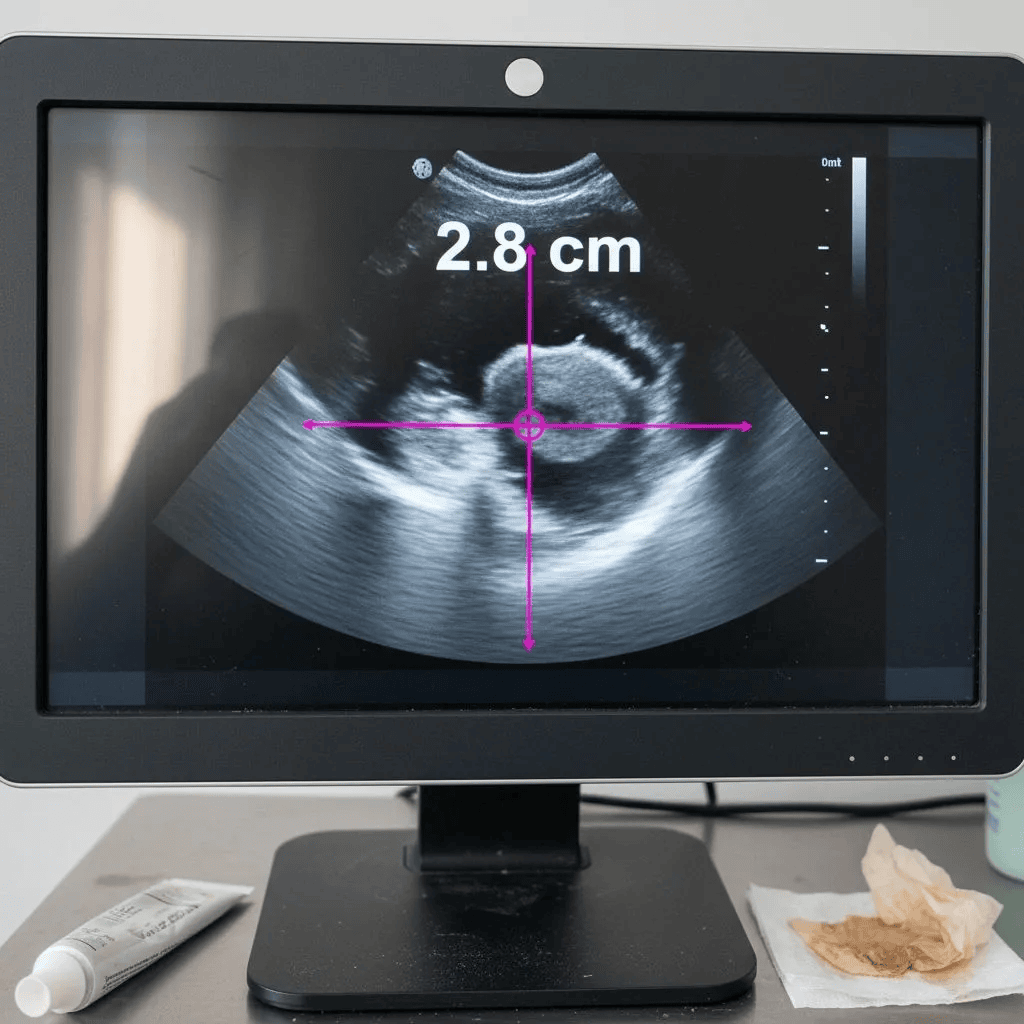
Active surveillance for thyroid cancer is one of the most counterintuitive ideas in thyroid medicine. The patient has a confirmed cancer diagnosis, and the plan not to operate, but to “watch it”. For carefully selected patients with very small low-risk papillary thyroid cancers, this approach is supported by 30 years of data showing equivalent long-term outcomes to immediate surgery, with substantially less morbidity. It is genuinely a valid alternative for the correctly selected patients, not a compromise.
The data supporting active surveillance comes primarily from two Japanese cancer centers (Kuma Hospital and Cancer Institute Hospital), which have followed thousands of patients with small papillary thyroid cancers under structured observation since the 1990’s. Multiple American academic centers including Memorial Sloan Kettering and Johns Hopkins have published their own active surveillance programs over the past decade. The findings have been remarkably consistent across populations.
In published series, approximately 10 to 15% of low-risk microcarcinomas show clinically meaningful growth over 10 years. Approximately 1 to 2% develop new lymph node involvement. The remaining 85% or more never require surgery. No patient has died of thyroid cancer while on active surveillance in the largest published series. Patients who converted to surgery because of growth had outcomes equivalent to those who had upfront surgery.
Strict Selection Criteria
Active surveillance only works because it is offered to very carefully selected patients. The criteria that are used for selection are not flexible.
-
Confirmed papillary thyroid cancer: Biopsy-proven Bethesda VI. Other cancer types are not candidates.
-
Tumor 1 cm or less: The size threshold most centers use. Some programs accept up to 1.5 cm in selected patients.
-
No suspicious lymph nodes: Comprehensive ultrasound of central and lateral neck must be normal.
-
Tumor location away from critical structures: Tumors abutting the trachea, esophagus, or the path of the recurrent laryngeal nerve are not candidates.
-
No high-risk pathology features: Tall cell and columnar cell variants are not candidates.
-
Patient capable of and committed to long-term follow-up: Active surveillance requires reliable surveillance imaging at defined intervals.
-
Patient understands the approach and accepts the small risk of progression: Informed consent is essential.
⚕ Clinical note: Younger patients (typically under 40) are followed somewhat more conservatively because their cancers, when they do progress, can do so more actively over the decades remaining. Older patients (over 60) are particularly good candidates because tumors in this age group are even less likely to progress meaningfully. Age is not a strict cutoff but does influence the discussion. Also, older patients can typically have other significant medical comorbidities which help make active surveillance of their thyroid cancer an attractive option.
What Active Surveillance Actually Looks Like
| Time Point | Activity |
|---|---|
| Baseline | Comprehensive ultrasound, thyroid function tests, multidisciplinary review confirming candidacy. |
| First 2 years | Ultrasound every 6 months. |
| Years 2 to 5 | Ultrasound every 6 to 12 months if stable. |
| Beyond 5 years | Annual ultrasound if stable. |
| At any visit | Growth of 3 mm or more or a new suspicious lymph node prompts conversion to surgery. |
When to Convert to Surgery
Conversion to surgery during active surveillance is not a failure. It is what the program is designed to do when growth is detected. The published indications for conversion are clear and consistent across programs.
-
Tumor growth of 3 mm or more in diameter: The most common trigger.
-
Appearance of any suspicious lymph node: An immediate indication for surgery regardless of tumor size.
-
Development of extrathyroidal extension on imaging: Tumor invasion beyond the thyroid capsule.
-
Patient preference: A patient who decides during follow-up that they prefer definitive surgery can convert at any time.
Comparing the Trade-Offs
| Active Surveillance | Immediate Surgery |
|---|---|
| Avoids surgery in 85% or more. | Definitive treatment in one visit cycle. |
| Requires ongoing ultrasound surveillance. | Eliminates cancer surveillance anxiety. |
| Approximately 10 to 15% will need delayed surgery. | Small risk of surgical complications even with lobectomy. |
| Preserves all thyroid function indefinitely if surgery is never needed. | Lobectomy preserves about half the thyroid; about 30% need levothyroxine after. |
⚕ Clinical note: Patients vary substantially in their psychological response to active surveillance. Some find watching a known cancer extremely difficult. Others find surgery’s permanence and recovery more difficult than ongoing surveillance. The right choice depends as much on how the patient lives with each approach as on the medical facts. Both are valid and both have good outcomes.
The Bottom Line
Active surveillance is a real, evidence-based, valid alternative to immediate surgery for carefully selected patients with low-risk papillary thyroid microcarcinoma. Long-term outcomes are excellent regardless of whether a patient chooses surveillance or upfront surgery. The approach is offered at major academic centers and requires a team with established experience in the protocol.
If you have a confirmed papillary thyroid microcarcinoma, ask your thyroid surgeon and endocrinologist whether you meet the criteria for active surveillance and whether their center has an established program.
This article is intended for patient education only. It does not constitute medical advice and does not replace a consultation with your physician. Individual patient circumstances and clinical judgment determine the appropriate evaluation and management for every patient.
More from the Thyroid Cancer series




Ready to Talk to a Specialist?
A thyroid specialist can review your specific results, answer your questions, and help you understand exactly what your next steps should be. The ATLAS network connects you with experienced thyroid and parathyroid expert physicians who focus on thyroid disease.
Find a Thyroid Specialist Near You →