Papillary Thyroid Cancer: The Most Common Diagnosis and Why the Outlook Is Usually Excellent
Written by John P. Sabra, MD FACS
Updated September 2026
Educational only. This article is not medical advice. Always consult your physician about your individual situation.
When a thyroid nodule biopsy comes back as papillary thyroid cancer, the word that instantly creates fear and worry is, of course, “cancer”. The word that matters more, but rarely gets said in the same conversation, is “curable”. Papillary thyroid cancer is the most common type of thyroid cancer by a wide margin, and for the vast majority of patients diagnosed with it today, the long-term outlook is excellent.
Most patients hearing a diagnosis of papillary thyroid cancer have no prior context for what that means. The word “cancer” triggers a response calibrated for other cancers such as breast, lung, or colon, diseases with very different biology and prognosis. Papillary thyroid cancer behaves differently from those diseases in nearly every way that matters: it grows slowly, it stays confined to the thyroid for years in most patients, it responds well to treatment, and it has a five-year survival rate that exceeds 98% for most patients diagnosed today.
Knowing this does not eliminate the fear of a cancer diagnosis. But it does change what the conversation with your surgeon needs to cover, and it changes the urgency of the decisions ahead. Most papillary thyroid cancers are not surgical emergencies. They are diagnoses that warrant a clear-headed plan, made with a high-volume thyroid surgeon, on a timeline measured in weeks to months rather than days.
What Papillary Thyroid Cancer Is
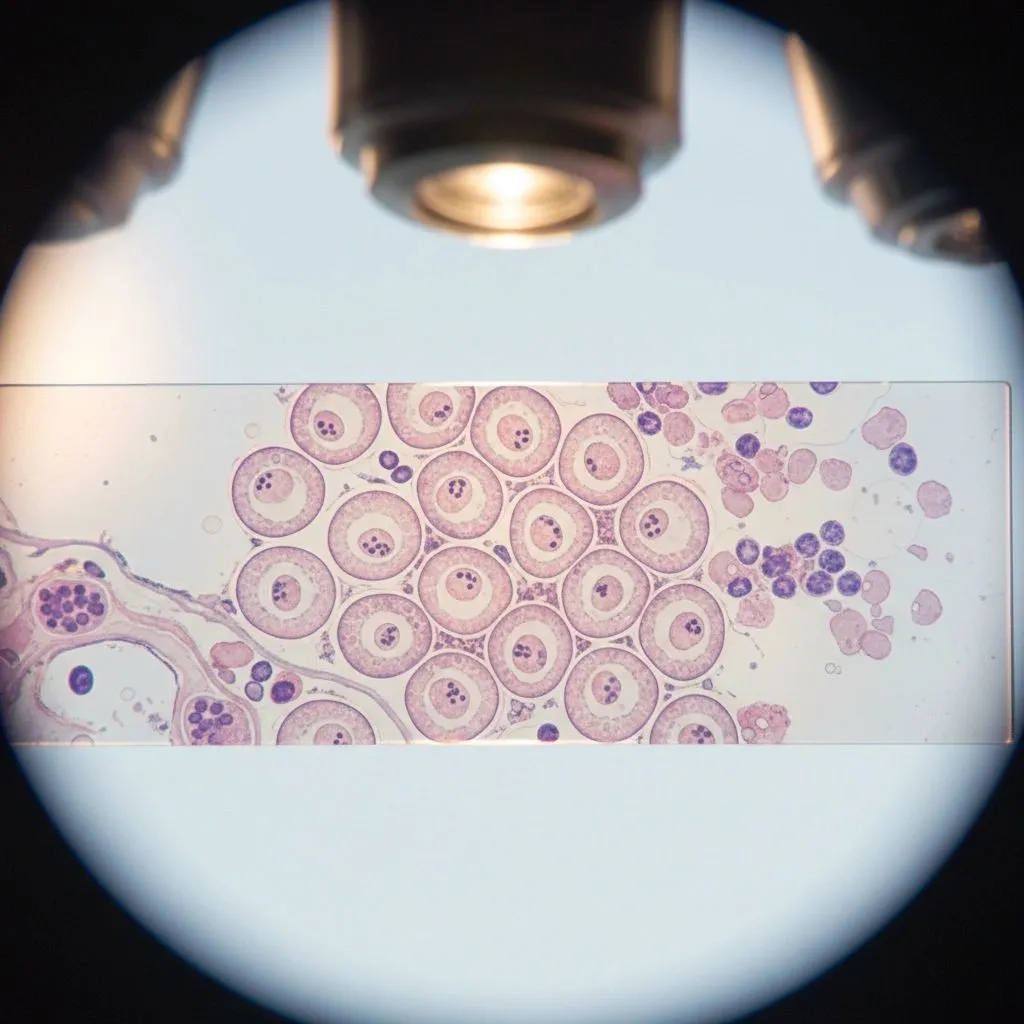
Papillary thyroid cancer is a malignant tumor that arises from the follicular cells of the thyroid gland, the cells that produce thyroid hormone. It is the most common form of thyroid cancer, accounting for approximately 80 to 85% of all thyroid cancer diagnoses in the United States. Under the microscope, the cancer cells form distinctive finger-like projections called papillae, which is where the name comes from. The pathologist confirms the diagnosis by identifying these structures along with specific changes in the cell nuclei.
Papillary thyroid cancer is considered a differentiated thyroid cancer (DTC), meaning the cancer cells still resemble normal thyroid cells and retain many of their functions. This is part of why the disease behaves more like a chronic, manageable condition than the aggressive cancers most patients associate with the word. Differentiated cancers absorb iodine, respond to thyroid-stimulating hormone, and can be tracked over time with a specific blood marker (thyroglobulin) after surgery. These features are the foundation of how the disease is treated and monitored.
Papillary thyroid cancer is the most curable common cancer in adults. The five-year survival rate for localized disease is greater than 98%. Even when the cancer has spread to neck lymph nodes (which is common), long-term survival remains above 95% with appropriate treatment. This is fundamentally different from most other cancers and worth keeping in mind during the first few weeks after diagnosis.
How Papillary Thyroid Cancer Is Usually Found
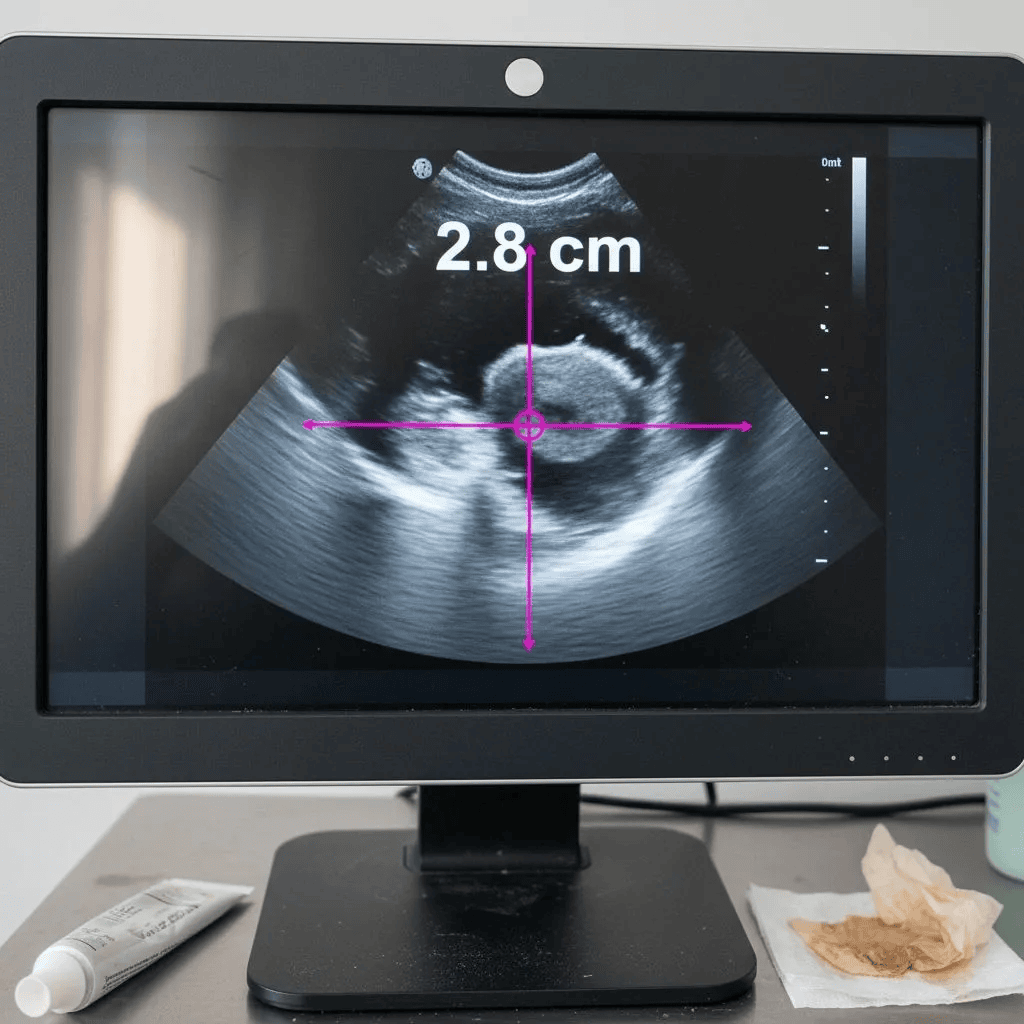
The majority of papillary thyroid cancers are discovered as thyroid “nodules”. A nodule may be felt during a physical exam, noted incidentally on a CT or MRI of the neck performed for another reason, or identified on a screening neck ultrasound. From there, the standard pathway is risk stratification using the TI-RADS scoring system (an ultrasound nodule evaluation), followed by fine-needle aspiration biopsy (FNA) when the nodule meets size and feature thresholds.
The biopsy result is reported using the Bethesda classification system. A Bethesda VI result confirms papillary thyroid cancer with greater than 97% certainty. A Bethesda V result is highly suspicious and almost always proceeds to surgical management. Bethesda III and IV results are indeterminate and frequently lead to molecular testing or diagnostic surgery before a definitive diagnosis is made. A Bethesda II result is benign.
Why the Outlook Is Usually Excellent
The reason papillary thyroid cancer carries such favorable survival statistics comes down to four characteristics of the disease.
-
Slow growth: Most papillary thyroid cancers grow over years rather than months. Many are present for a decade before even being discovered.
-
Regional spread before distant spread: When papillary cancer spreads, it typically goes to the lymph nodes in the central neck region first. Spread to lungs or bones is uncommon, but can occur in rare caes.
-
Iodine sensitivity: The cells absorb iodine, which allows radioactive iodine to be used as a targeted treatment for residual or recurrent disease.
-
Measurable surveillance marker: After a total thyroidectomy, thyroglobulin is produced only by thyroid cells, making it a sensitive blood test for detecting cancer recurrence early.
The vast majority of patients with papillary thyroid cancer are cured by surgery alone. A smaller subset benefit from additional radioactive iodine treatment after surgery. A small minority of patients have more aggressive disease that requires more extensive management. Distinguishing these groups is the central job of the surgeon and endocrinologist managing your care.
Your Treatment Options
Treatment for papillary thyroid cancer is no longer one-size-fits-all. Over the past decade, guidelines from the American Thyroid Association have moved toward less aggressive treatment for low-risk disease and more intensive treatment for higher-risk disease, rather than a uniform approach for all patients. The key to remember is that thyroid cancer treatment is a dynamic process individualized for each patient.
| Treatment | Who It Is Typically For | What It Involves |
|---|---|---|
| Active surveillance | Selected patients with very small (under 1 cm) low-risk papillary cancers with no concerning features and no lymph node involvement. May also be appropriate for larger cancers in high-risk surgical patients. | No surgery initially. Neck ultrasound every 6 to 12 months. Surgery deferred until growth or new features develop, which may never happen. |
| Thyroid lobectomy | Patients with cancers between 1 and 4 cm, confined to one lobe, with no aggressive features or lymph node involvement. | Removal of the affected half of the thyroid only. Preserves partial thyroid function. Many patients avoid lifelong hormone replacement. |
| Total thyroidectomy | Cancers larger than 4 cm, bilateral disease, aggressive subtypes, hi-risk genetic markers, or clear lymph node involvement. | Removal of the entire thyroid gland. Enables radioactive iodine therapy and thyroglobulin surveillance. Requires lifelong levothyroxine. |
| Total thyroidectomy plus neck dissection | Cancers with biopsy-proven or imaging-suspected lymph node involvement. | Removal of the thyroid plus the affected lymph node compartments of the neck. |
A decade ago, total thyroidectomy was the default for almost every papillary thyroid cancer. The current evidence supports lobectomy for many low-risk cancers between 1 and 4 cm, with equivalent long-term survival. If you have been told you need a total thyroidectomy for a small unilateral papillary cancer, it is reasonable to ask whether a lobectomy is an option in your case and why or why not.
Lymph Nodes and the Decision About Neck Surgery
Papillary thyroid cancer spreads to lymph nodes in the central neck in roughly 30 to 50% of patients. This sounds alarming and is one of the harder facts to communicate to a newly diagnosed patient. The reality is that lymph node involvement in papillary thyroid cancer does not have the same prognostic weight that lymph node involvement has in breast or colon cancer. Survival remains excellent. Recurrence rates are somewhat higher, but most recurrences are treatable.
The decision about whether to remove lymph nodes during the initial surgery (a procedure called central neck dissection) is one of the more nuanced decisions in thyroid cancer surgery. Routine prophylactic dissection in patients without obvious node involvement remains controversial. Removal of clearly involved nodes is standard. Preoperative ultrasound mapping of the neck is essential to make this decision properly, and it is one of the markers of a surgeon and center who handle thyroid cancer regularly.
Life After Treatment: Surveillance and Survival
After definitive treatment, papillary thyroid cancer requires structured surveillance for years, though the intensity decreases over time. The standard surveillance program includes periodic neck ultrasound, periodic thyroglobulin blood tests (after total thyroidectomy), and TSH monitoring with adjustment of levothyroxine dose. Most patients have their first follow-up at 3 to 6 months, then every 6 to 12 months for several years, then annually.
Recurrence is something to watch for, not something to fear. Most recurrences of papillary thyroid cancer occur in neck lymph nodes and are detected by ultrasound or thyroglobulin rise. They are usually treatable with additional surgery or radioactive iodine, and recent ablation techniques with ethanol or radiofrequency ablation may also play a role. Late distant recurrence in lungs or bones is uncommon, occurs years after the initial diagnosis when it does, and remains treatable in most cases with modern therapy.
An important predictor of a good outcome with papillary thyroid cancer is being treated by a surgeon and team who manage thyroid cancer regularly. High-volume thyroid surgeons have lower complication rates, more complete initial surgery, and higher cure rates than surgeons who perform a small number of thyroid operations per year. Ask any prospective surgeon how many thyroid cancer operations they perform per year.
The Bottom Line
Papillary thyroid cancer is the most common form of thyroid cancer, accounts for the great majority of new diagnoses, and is one of the most treatable malignancies in medicine. Survival rates exceed 98% for most patients. Treatment options have evolved toward less aggressive surgery for low-risk disease, including lobectomy and even active surveillance for very small cancers, while reserving total thyroidectomy and radioactive iodine for patients who genuinely benefit from them.
If you have just been diagnosed, find a high-volume thyroid surgeon and ask specifically which treatment option fits your tumor size, features, and lymph node status, and why.
This article is intended for patient education only. It does not constitute medical advice and does not replace a consultation with your physician. Individual patient circumstances and clinical judgment determine the appropriate evaluation and management for every patient.
More from the Thyroid Cancer series



Ready to Talk to a Specialist?
A thyroid specialist can review your specific results, answer your questions, and help you understand exactly what your next steps should be. The ATLAS network connects you with experienced thyroid and parathyroid expert physicians who focus on thyroid disease.
Find a Thyroid Specialist Near You →