
Family History of Thyroid Cancer: Should You Be Screened?
Written by John P. Sabra, MD FACS
Updated September 2026
Educational only. This article is not medical advice. Always consult your physician about your individual situation.
A family history of thyroid cancer raises the question of whether unaffected family members should be screened. The answer depends on the type of thyroid cancer in the family, the number of affected relatives, and whether any genetic syndrome has been identified. For most patients with a single affected relative, the answer is reassurance rather than aggressive screening. For specific hereditary syndromes, the answer is meaningfully different.
Most thyroid cancer is sporadic. The lifetime risk of thyroid cancer in the general population is approximately 1 to 2%. Having a first-degree relative with sporadic differentiated thyroid cancer (papillary or follicular) roughly doubles to triples that risk. The absolute risk stays low, and routine screening of asymptomatic family members is not generally recommended.
The situations where family-based screening becomes appropriate involve specific patterns of cancer that point to an inherited syndrome rather than coincidental sporadic disease.
When Screening Is Recommended
-
Family member diagnosed with medullary thyroid cancer: First-degree relatives should have genetic testing for the RET mutation. Carriers are then evaluated for MEN2 syndrome and considered for a prophylactic thyroidectomy surgery.
-
Multiple family members with thyroid cancer in the same lineage: Familial non-medullary thyroid cancer (FNMTC) syndromes can be identified when 3 or more first-degree relatives are affected.
-
Family member with MEN1 syndrome: First-degree relatives should have MEN1 gene testing.
-
Family history of parathyroid cancer or HPT-JT syndrome: Specific genetic testing and screening apply.
-
Family member with thyroid cancer at an unusually young age (under 18): This suggests a possible genetic syndrome and prompts genetic counseling.
-
Family member with thyroid cancer plus other syndromic features: Cowden syndrome, familial adenomatous polyposis (FAP), and others can include thyroid cancer.
⚕ Clinical note
A single first-degree relative with sporadic papillary thyroid cancer does not warrant screening of family members. The risk increase is modest, the absolute risk stays low, and screening would turn up many incidental findings of no clinical significance. Reassurance, plus standard self-awareness for neck lumps or persistent symptoms, is the appropriate response.
Familial Non-Medullary Thyroid Cancer
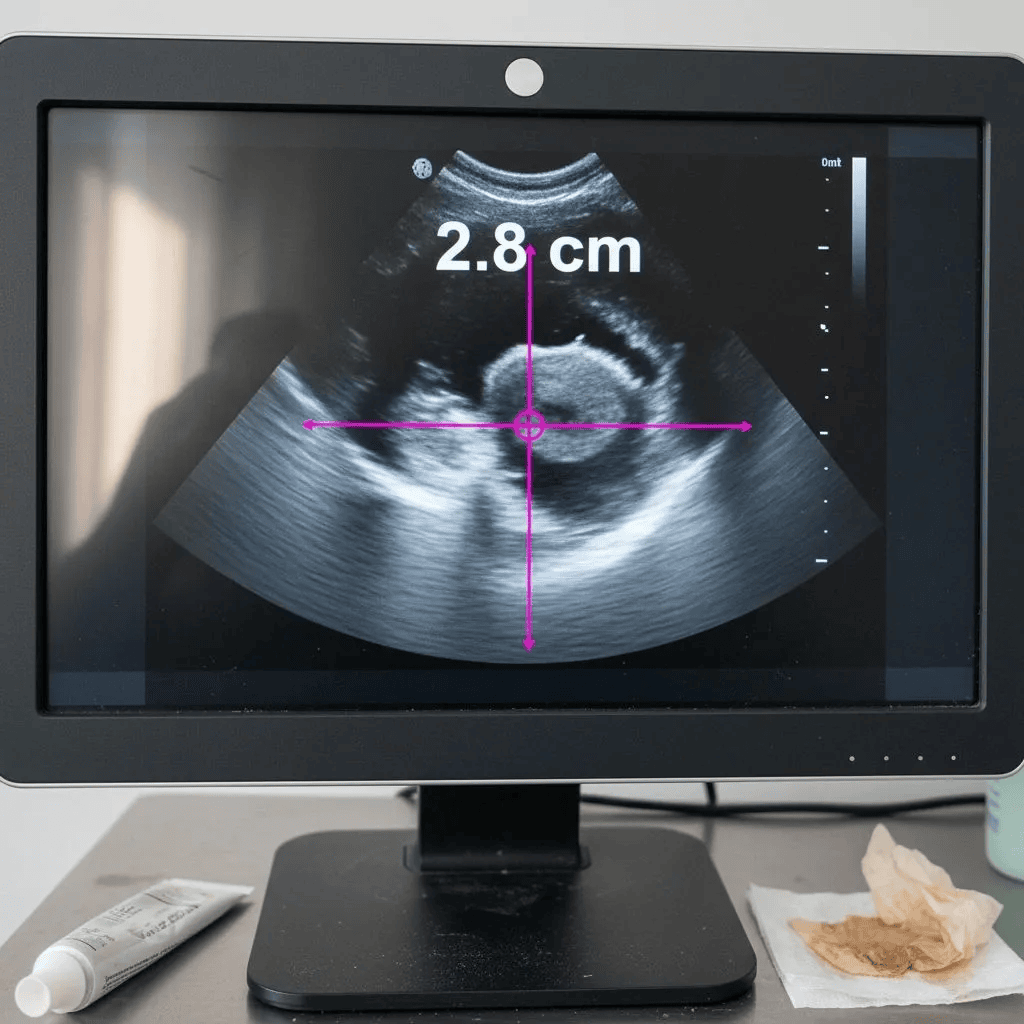
Familial non-medullary thyroid cancer is a rare but recognized pattern. It is defined as papillary or follicular thyroid cancer in three or more first-degree relatives. Specific genetic causes have not been fully identified for most cases. The clinical implication is that family members of an FNMTC family are at meaningfully elevated risk, and screening with periodic neck ultrasound starting in young adulthood is appropriate.
What Screening Looks Like
| Family History | Recommended Screening Approach |
|---|---|
| One first-degree relative with sporadic papillary or follicular cancer | No specific screening. Standard self-awareness for neck lumps. |
| Three or more relatives with non-medullary thyroid cancer | Periodic neck ultrasound starting in young adulthood. Frequency individualized. |
| Medullary cancer in family | RET genetic testing for first-degree relatives. Carriers managed according to MEN2 protocols. |
| MEN1 or HPT-JT syndrome in family | Genetic testing and syndrome-specific surveillance for relatives. |
When to See a Genetic Counselor
-
A family member diagnosed with medullary thyroid cancer at any age.
-
Multiple family members with any type of thyroid cancer.
-
A family member with parathyroid cancer.
-
A family history of MEN syndromes, Cowden syndrome, or HPT-JT.
-
A personal or family history of multiple endocrine tumors.
-
A thyroid cancer diagnosis in a family member at an unusually young age.
⚕ Clinical note
Genetic counseling and testing have become more accessible and less expensive over the past decade. Even when the index of suspicion is moderate, a single visit with a genetic counselor can clarify whether testing is warranted and which specific tests would be informative. The cost of that clarity is often worth the modest investment.
The Bottom Line
Most thyroid cancer is sporadic, and family-based screening is not routinely recommended for relatives of patients with a single sporadic case. Screening becomes appropriate for medullary thyroid cancer in any family member, for families with three or more affected relatives, and for known hereditary syndromes. Genetic counseling is the right first step for any family with a pattern suggestive of inherited disease.
If your family history includes medullary thyroid cancer, multiple thyroid cancer cases, or any MEN syndrome features, ask for a referral to a genetic counselor before you decide on a screening plan.
This article is intended for patient education only. It does not constitute medical advice and does not replace a consultation with your physician. Individual patient circumstances and clinical judgment determine the appropriate evaluation and management for every patient.
More from the Thyroid Cancer series



Ready to Talk to a Specialist?
A thyroid specialist can review your specific results, answer your questions, and help you understand exactly what your next steps should be. The ATLAS network connects you with experienced thyroid and parathyroid expert physicians who focus on thyroid disease.
Find a Thyroid Specialist Near You →