Thyroid Nodules in Pregnancy: What Is Different and What Is the Same
Written by John P. Sabra, MD FACS
Updated September 2026
Educational only. This article is not medical advice. Always consult your physician about your individual situation.
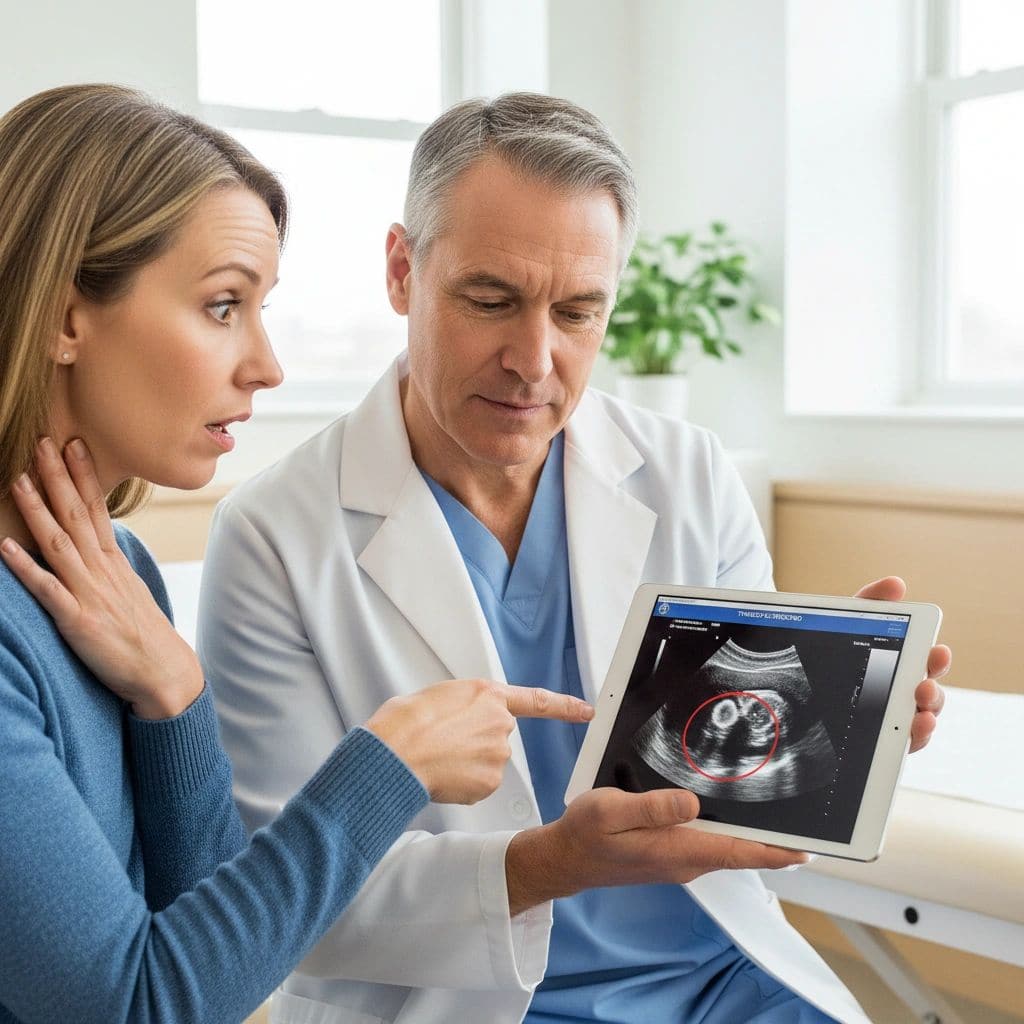
A thyroid nodule found during pregnancy brings a particular kind of anxiety: you are worried about your own health and about the pregnancy at the same time. The reassuring part is that nearly all thyroid evaluation can be done safely during pregnancy, that nearly all thyroid nodules can be managed by surveillance until after delivery, and that even when cancer is diagnosed, outcomes for both mother and baby are generally excellent.
Thyroid nodules are common during pregnancy because they are common in women of childbearing age. They are often found for the first time during pregnancy, when the increased blood flow to the neck and the added patient and provider attention to thyroid health make them more noticeable. The risk of cancer in a thyroid nodule discovered during pregnancy is similar to the risk in the same nodule discovered outside of pregnancy, approximately 5 to 10%.
The real differences in pregnancy are which tests are appropriate, the timing of any biopsy or treatment, and when surgery is deferred until after delivery rather than performed during pregnancy.
What Testing Is Safe
-
Thyroid ultrasound: Safe in any trimester. The first-line evaluation for any thyroid finding during pregnancy.
-
TSH and thyroid function tests: Safe and important. The reference ranges in pregnancy differ from non-pregnant values.
-
Fine-needle aspiration biopsy: Safe in pregnancy. Performed under local anesthesia as a brief office procedure, with no contraindication.
-
CT with iodinated contrast: Generally avoided unless essential. The iodine load can affect the fetal thyroid.
-
Radioactive iodine: Absolutely contraindicated in pregnancy. It crosses the placenta and can destroy the fetal thyroid.
-
Thyroid scan (uptake scan): Contraindicated in pregnancy for the same reason.
⚕ Clinical note
A thyroid biopsy during pregnancy carries no specific pregnancy-related risk. The needle does not reach anywhere near the uterus, no sedation is required, and the procedure can be performed in any trimester under ultrasound guidance. There is no reason to defer biopsy of a suspicious nodule until after delivery if the imaging features warrant it.
When to Biopsy and When to Defer
The standard size and radiology-based criteria for biopsy apply in pregnancy. A suspicious nodule meeting the standard thresholds is biopsied. A small or low-suspicion nodule can be observed.
| Scenario | Approach in Pregnancy |
|---|---|
| Low-risk small nodule | Observation. Ultrasound follow-up after delivery. |
| Suspicious nodule meeting standard size criteria | Biopsy during pregnancy. |
| Benign biopsy result | Continue pregnancy as normal. Surveillance ultrasound after delivery. |
| Cancer confirmed on biopsy | Decision between surgery in the second trimester or after delivery, based on cancer characteristics. |
When Surgery Is Performed During Pregnancy
Whether to operate during pregnancy or wait until after delivery depends on the type and stage of cancer. Most differentiated thyroid cancers (papillary, follicular) are slow-growing and can be safely operated after delivery without compromising long-term outcomes. Surgery during pregnancy is reserved for selected situations.
-
Aggressive cancer features (extensive lymph node involvement, rapid growth): May warrant second-trimester surgery.
-
Medullary or anaplastic thyroid cancer: These generally require prompt treatment regardless of pregnancy.
-
Compressive symptoms: Airway or swallowing problems from a large goiter may require surgery.
-
Strong patient preference: After a full informed consent discussion.
When thyroid surgery is performed during pregnancy, the second trimester (weeks 14 to 26) is the preferred window. The first trimester carries higher anesthesia risk to the fetus and is avoided when possible. The third trimester carries higher risk of preterm labor and is also avoided. Second-trimester thyroid surgery in experienced hands has an excellent safety record for both mother and baby.
⚕ Clinical note
For most patients diagnosed with differentiated thyroid cancer during pregnancy, surgery after delivery produces oncologic outcomes equivalent to surgery during pregnancy. You and your team should not feel pressure to operate during pregnancy unless specific features make it the better choice. Deferring is often the right decision.
Thyroid Hormone in Pregnancy
Thyroid hormone requirements typically rise during pregnancy. Patients already on levothyroxine often need a dose increase of 25 to 50% during the first trimester. New diagnoses of hypothyroidism in pregnancy are treated promptly because adequate maternal thyroid hormone is essential for fetal brain development. TSH targets in pregnancy differ from non-pregnant ranges and are managed by the obstetric and endocrinology teams.
The Bottom Line
Thyroid nodules in pregnancy can be evaluated with ultrasound and biopsy without risk to the pregnancy. Radioactive iodine and thyroid scans are contraindicated. Most thyroid cancers diagnosed during pregnancy can be safely managed by surgery after delivery. Selected cases warrant second-trimester surgery. Outcomes for both mother and baby are generally excellent.
If a thyroid nodule has been found during your pregnancy, ask for evaluation by a thyroid endocrinologist and a thyroid surgeon experienced with pregnancy-related cases, and do not assume that surgery must happen during pregnancy.
This article is intended for patient education only. It does not constitute medical advice and does not replace a consultation with your physician. Individual patient circumstances and clinical judgment determine the appropriate evaluation and management for every patient.
More from the Ultrasound series



Ready to Talk to a Specialist?
A thyroid specialist can review your specific results, answer your questions, and help you understand exactly what your next steps should be. The ATLAS network connects you with experienced thyroid and parathyroid expert physicians who focus on thyroid disease.
Find a Thyroid Specialist Near You →