Toxic Thyroid Nodule: Surgery, RF-Ablation, RAI, or Meds. Which Is Right?
Written by John P. Sabra, MD FACS
Updated September 2026
Educational only. This article is not medical advice. Always consult your physician about your individual situation.
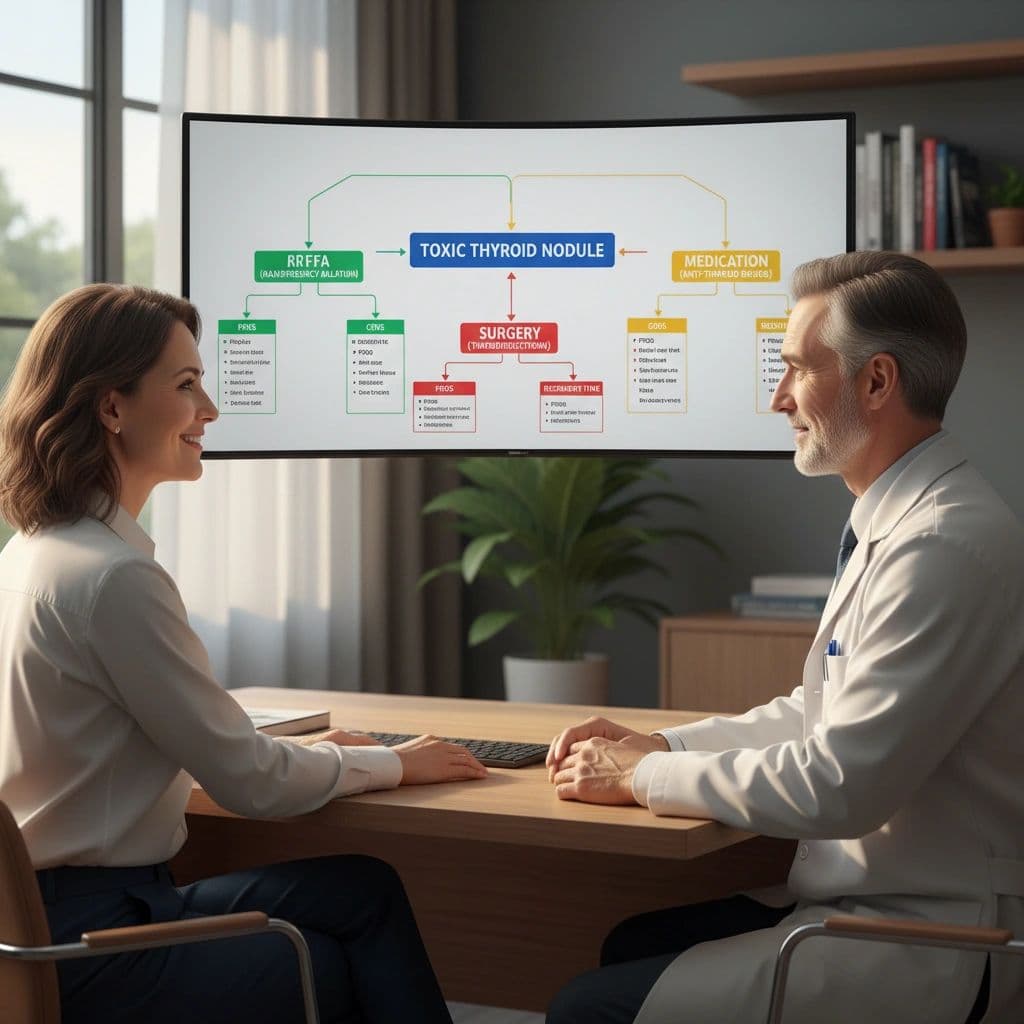
A toxic thyroid nodule causes hyperthyroidism without an autoimmune cause. The treatment options differ in important ways from those for Graves’ disease, and the right choice depends on the size of the nodule, your age, the severity of the hyperthyroidism, and whether specific procedures are available locally. Knowing what each option does and does not deliver makes this decision much clearer.
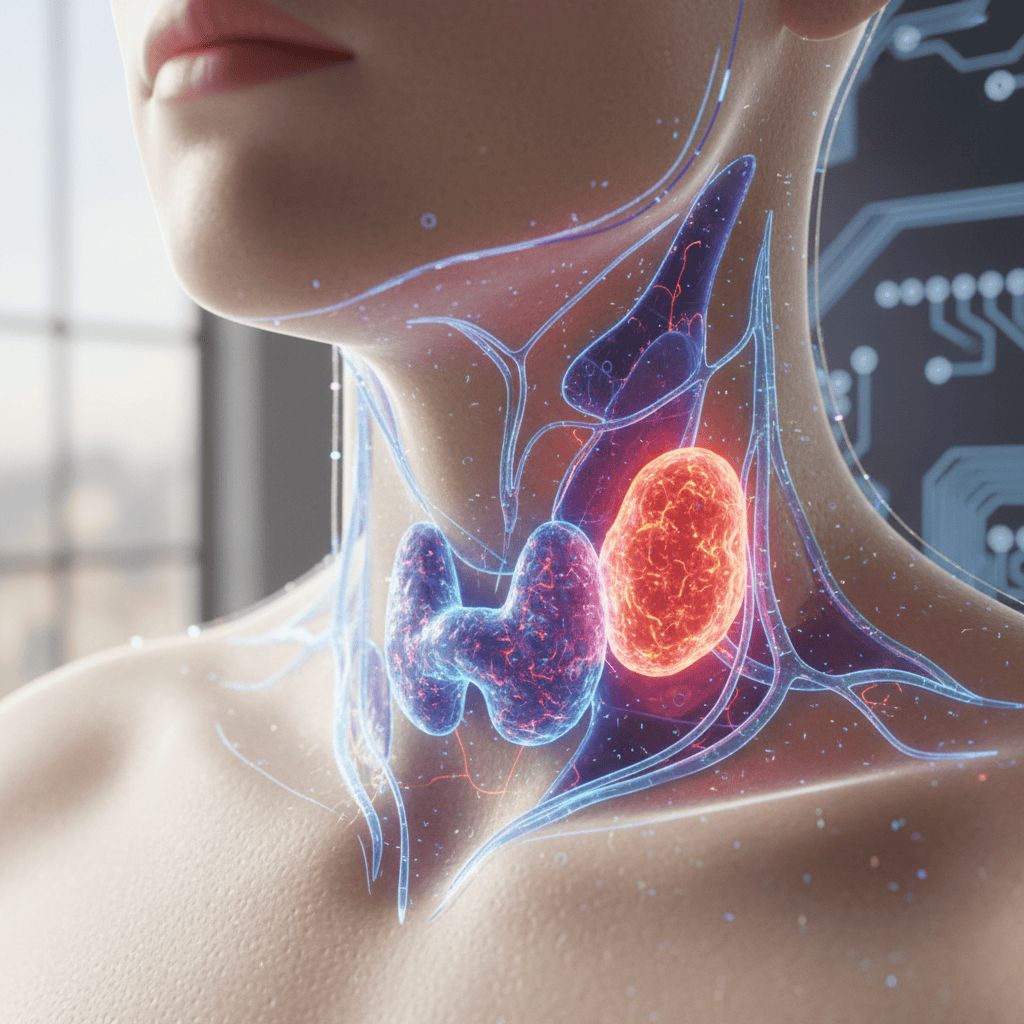
A toxic nodule, also called an autonomously functioning thyroid nodule or a Plummer disease nodule, is a single thyroid nodule that produces thyroid hormone independent of TSH control. It is the second most common cause of hyperthyroidism after Graves’ disease. A thyroid scan typically shows a hot focal area of uptake with the rest of the thyroid suppressed.
Unlike Graves’ disease, the antibodies are not relevant here, the eye disease risk is not present, and the rest of the thyroid is healthy. The treatment focus is on eliminating the autonomous tissue while ideally preserving the rest of the thyroid.
The Four Options Compared
| Option | Cure Rate | Considerations |
|---|---|---|
| RAI (Radioactive iodine) | 85 to 95% with single dose | Outpatient. Some risk of progressing to permanent hypothyroidism. Radiation exposure. |
| Thyroid lobectomy | Essentially 100% | General anesthesia, neck incision, small surgical risk. About 30% need levothyroxine after. |
| RFA (Radio Frequency Ablation) | 60 to 80% with one or two sessions | Outpatient, no anesthesia or incision, preserves thyroid function. Less consistent cure than RAI or surgery. |
| Antithyroid medication | Suppression only, not definitive cure | Used to control symptoms while planning definitive treatment, or for patients who cannot tolerate other options. |
How to Choose
-
Older patients with significant comorbidities: RAI is often preferred for its outpatient nature and absence of surgical risk. Definitive control comes with one dose in most cases.
-
Younger patients wanting to avoid radiation: RFA or surgery becomes attractive. Both preserve thyroid function more reliably than RAI.
-
Women planning future pregnancy: Surgery or RFA is preferred over RAI, since RAI requires 6 to 12 months of contraception afterward.
-
Very large toxic nodules (over 4 to 5 cm): Surgery is most reliable. RAI may need higher doses, and RFA may not fully address larger nodules.
-
Indeterminate biopsy: Surgery is appropriate, addressing both the hyperthyroidism and the potential cancer.
-
Severe hyperthyroidism: Antithyroid medication first to stabilize, then definitive treatment.
-
Symptomatic compression or visible neck mass: Surgery removes the bulk and resolves the hyperthyroidism in one step.
⚕ Clinical note The thyroid that contains a toxic nodule is otherwise healthy. This is fundamentally different from Graves’ disease, where the whole thyroid is affected by the autoimmune process. The implication is that lobectomy can fully cure a toxic nodule and leave you with a normal contralateral thyroid lobe. Total thyroidectomy is generally not necessary for a single toxic nodule.
⚕ Clinical note Antithyroid medication is not a definitive treatment for a toxic nodule. Unlike Graves disease, where medication can sometimes induce long-term remission, a toxic nodule will keep producing excess hormone as long as the autonomous tissue is present. Medication can control symptoms while definitive treatment is planned, but it is not a long-term solution by itself.
What Each Option Looks Like Practically
-
RAI: A single dose of radioactive iodine swallowed in the nuclear medicine department. The effect develops over 6 to 12 weeks. A brief period of isolation precautions (3 to 7 days) follows.
-
Lobectomy: Outpatient surgery, removal of the affected lobe with the toxic nodule. Hyperthyroidism resolves immediately. Recovery to most activity takes 1 to 2 weeks.
-
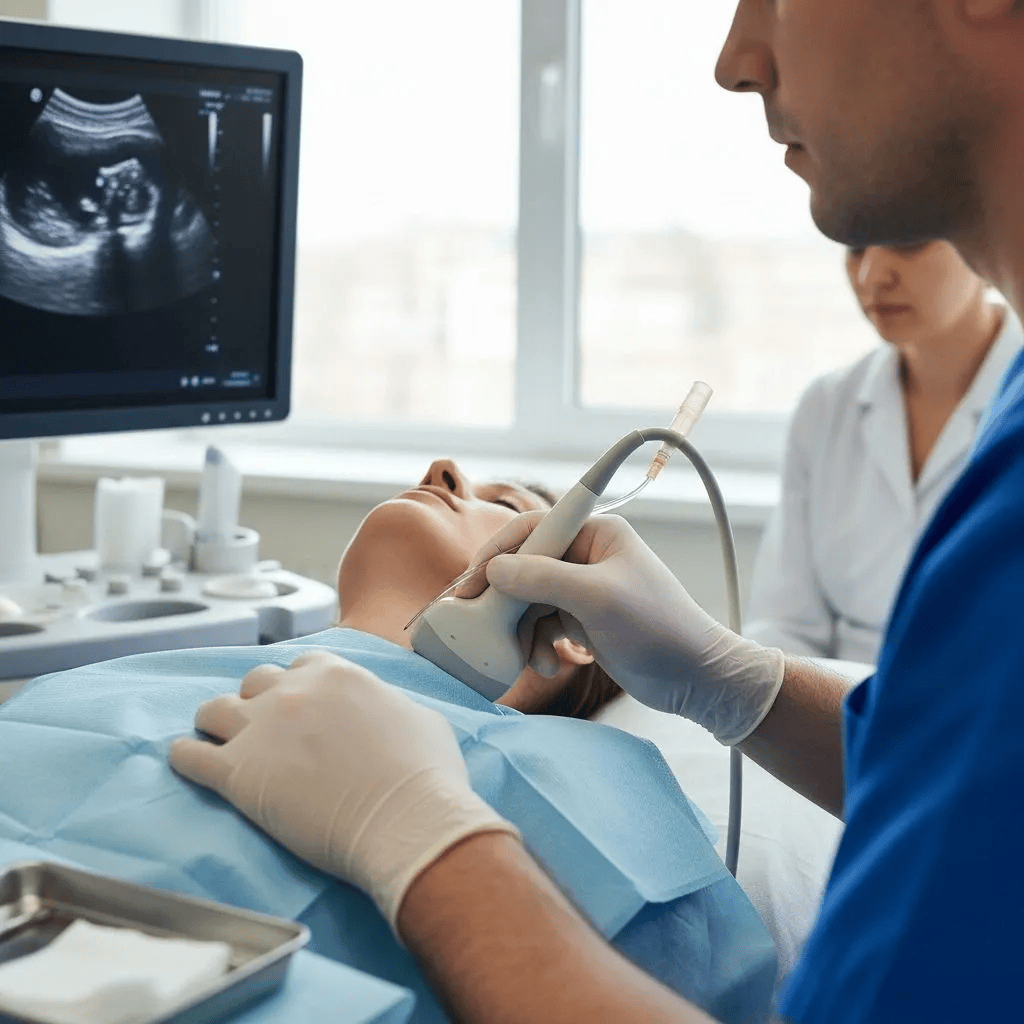
RFA: Outpatient procedure under local anesthesia, 30 to 60 minutes. Hyperthyroidism resolves over 1 to 3 months as the destroyed tissue is absorbed. A second session at 12 months may be needed.
-
Antithyroid medication: Daily oral medication with blood test monitoring. It controls symptoms while definitive treatment is planned, or in patients who decline definitive options. Not curative.
The Bottom Line
A toxic thyroid nodule has four treatment options, three of which can be definitive. RAI has the highest cure rate per single treatment but exposes you to radiation and raises the risk of later hypothyroidism. Lobectomy is essentially 100% curative but involves surgery. RFA preserves thyroid function and avoids both radiation and surgery, but it has a less consistent cure rate. Antithyroid medication controls symptoms but does not cure. The right choice depends on patient-specific factors and personal preferences.
Consult with both an endocrinologist and a thyroid surgeon, and consider RFA at a center that offers it, before you decide which of the four options fits your specific situation.
This article is intended for patient education only. It does not constitute medical advice and does not replace a consultation with your physician. Individual patient circumstances and clinical judgment determine the appropriate evaluation and management for every patient.
More from the Surgical Procedures series

Ready to Talk to a Specialist?
A thyroid specialist can review your specific results, answer your questions, and help you understand exactly what your next steps should be. The ATLAS network connects you with experienced thyroid and parathyroid expert physicians who focus on thyroid disease.
Find a Thyroid Specialist Near You →