Microwave and Laser Ablation: How They Compare to RFA
Written by John P. Sabra, MD FACS
Updated September 2026
Educational only. This article is not medical advice. Always consult your physician about your individual situation.
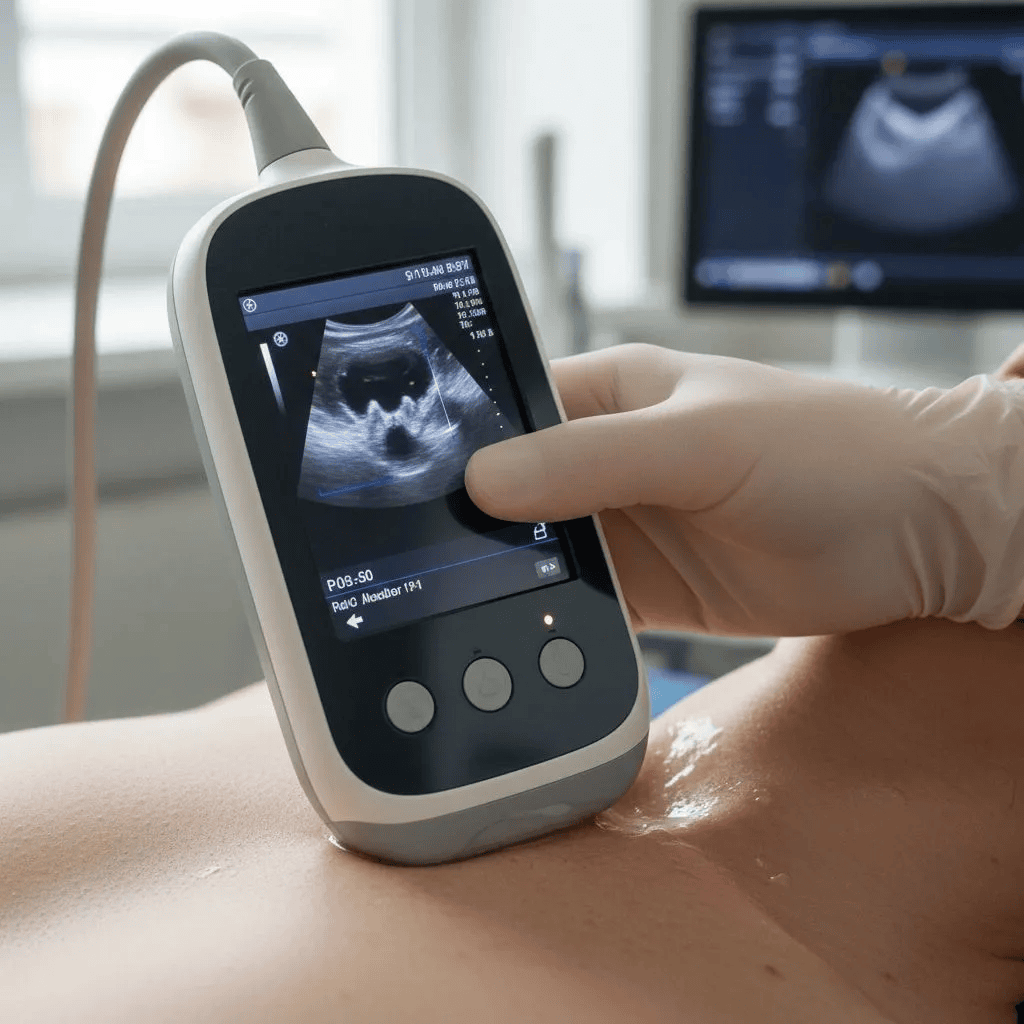
Radiofrequency ablation is the most widely used thermal ablation technique for thyroid nodules in the United States, but it is not the only one. Microwave ablation (MWA) and laser ablation (LA) are alternative thermal techniques used in some centers in Asia and Europe, with growing but still limited adoption in the United States. The differences between them are real but modest, and the underlying principle is identical: destroying nodule tissue with heat under ultrasound guidance.
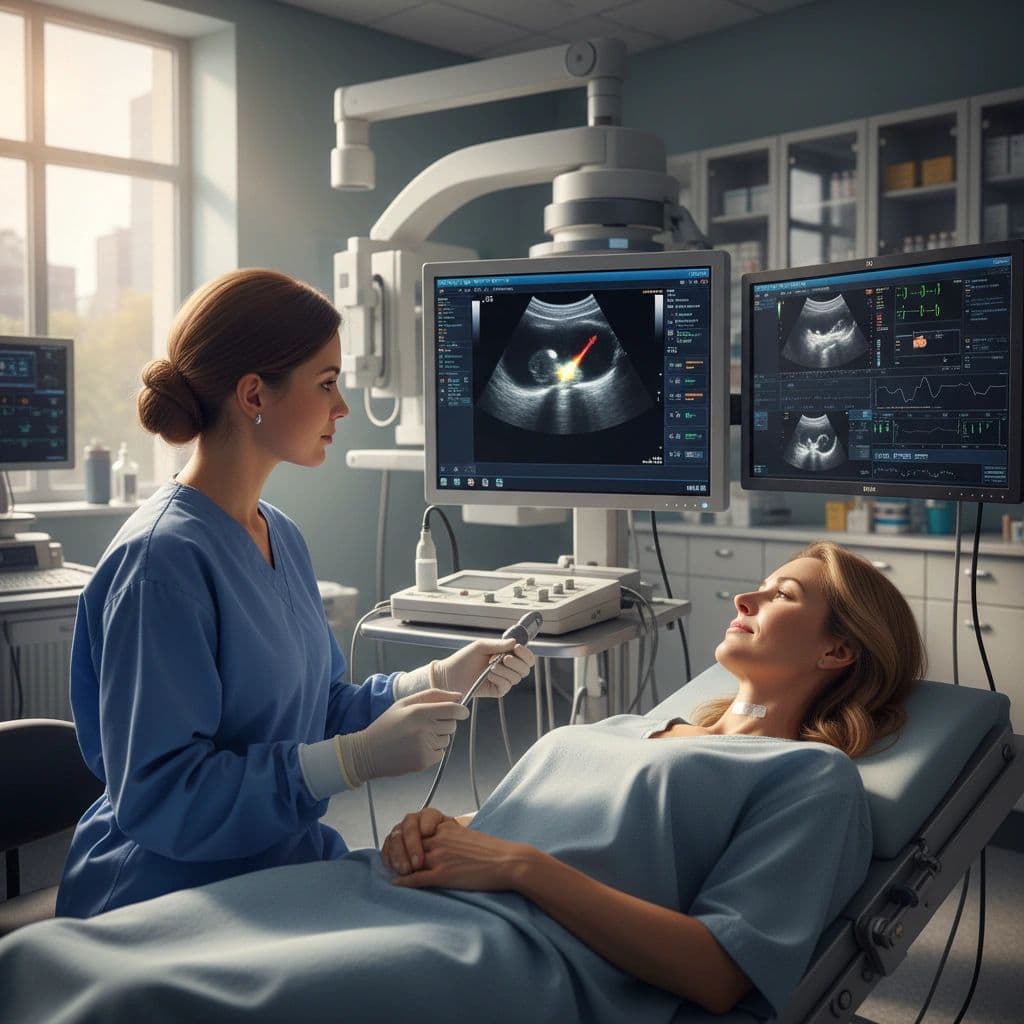
All three techniques, RFA, microwave, and laser, deliver thermal energy through a needle electrode or fiber placed into the thyroid nodule under ultrasound guidance. The body absorbs the destroyed tissue over several months, and the nodule shrinks. Volume reductions of 50 to 80% at 12 months are typical with each modality in published series. None of them requires general anesthesia or a neck incision, as they are done on an outpatient basis.
Where the modalities differ is in how the heat is generated, the shape of the heated zone, and the technical details of the procedure. For benign symptomatic thyroid nodules, the clinical outcomes are similar across all three when an experienced physician is doing the work.
How Each Works
Radiofrequency ablation (RFA): Uses alternating electrical current at radiofrequency wavelengths to generate heat by making the ions in the tissue oscillate. The tissue heats to around 60 to 100 degrees Celsius, which destroys the cells.
Microwave ablation (MWA): Uses electromagnetic waves at microwave frequencies to agitate water molecules in the tissue. Heating happens faster and reaches higher temperatures than RFA. The heated zone is somewhat larger and may be more uniform.
Laser ablation (LA): Uses a thin optical fiber to deliver laser energy that the tissue absorbs and converts to heat. The heated zone is smaller and more precisely controlled, which can help in delicate anatomy.
⚕ Clinical note: At most centers, the choice of modality is driven more by what equipment is on hand and what the operators are experienced with than by any intrinsic difference between the techniques. If you are considering thermal ablation, the doctor’s experience matters more than which of the three they use. Ask how many of these procedures they have done.
Comparison
| Feature | RFA | Microwave | Laser |
|---|---|---|---|
| Procedure time | 30 to 45 min | 30 to 45 min | 30 to 45 min |
| Heated zone shape | Moderate, predictable | Larger, somewhat broader | Small, precise |
| Volume reduction at 12 months | 50 to 80% | 50 to 85% | 40 to 70% |
| US availability | Widely growing | Limited | Very limited |
| Best suited for | Most benign nodules 1 to 4 cm | Larger nodules | Small nodules in delicate anatomy |
Why RFA Is the Most Common in the United States
RFA has been studied in thyroid disease longer than microwave or laser ablation. It received earlier regulatory approval for general body use, and the development of dedicated thyroid RFA equipment and training programs in the United States has been more extensive than for the other modalities. Most thyroid ablation centers in the United States use RFA almost exclusively, and most published U.S. outcome data is for RFA.
Microwave ablation is increasingly used at selected academic centers and has shown promising results in larger published series from Italy, China, and Korea. Laser ablation is more limited in U.S. practice but well established in selected European centers.
⚕ Clinical note: For most patients in the United States, RFA is the practical answer when thermal ablation is on the table. The candidacy criteria, the procedure experience, the outcome data, and the follow-up are all well established for it. The other modalities are valid but less accessible. A patient who specifically wants microwave or laser ablation may have to travel to find an experienced center.
What Is Likely to Change
Microwave ablation for thyroid disease is likely to become more available in the United States over the next several years as more centers gain experience. Laser ablation may follow, but more slowly. For now, the practical choice for most patients considering thermal ablation is RFA, performed at a center with established experience. The underlying principle is the same across all three; the specific technique matters less than the doctor’s skill.
The Bottom Line
RFA, microwave, and laser ablation are alternative thermal techniques that all destroy thyroid nodule tissue under ultrasound guidance, with similar long-term outcomes for benign nodules. RFA is the most widely available option in the United States and the practical choice for most patients. Microwave ablation is growing in availability. Laser ablation remains uncommon in the United States but is used in selected European centers. The operator’s experience matters more than the specific modality.
If you are considering thermal ablation for a benign thyroid nodule, focus your search on finding an experienced center, and treat RFA as the practical default in most U.S. settings.
This article is intended for patient education only. It does not constitute medical advice and does not replace a consultation with your physician. Individual patient circumstances and clinical judgment determine the appropriate evaluation and management for every patient.
More from the Options Besides Surgery series


Ready to Talk to a Specialist?
A thyroid specialist can review your specific results, answer your questions, and help you understand exactly what your next steps should be. The ATLAS network connects you with experienced thyroid and parathyroid expert physicians who focus on thyroid disease.
Find a Thyroid Specialist Near You →