
Ethanol Ablation for Recurrent Thyroid Cysts
Written by John P. Sabra, MD FACS
Updated September 2026
Educational only. This article is not medical advice. Always consult your physician about your individual situation.
Thyroid cysts that refill with fluid repeatedly after needle aspiration are one of the most frustrating situations in thyroid care. The fluid is drained, the cyst seems gone, and within weeks or months it is back to its original size. Percutaneous ethanol injection (PEI), also called ethanol ablation, is a simple effective treatment that resolves most recurrent cysts without surgery. For the right cyst, it is one of the most useful procedures in thyroid medicine.
Thyroid cysts develop when a portion of the gland becomes fluid-filled, either as a primary process or as a transformation of a benign nodule. Some are small and asymptomatic. Others enlarge enough to cause visible neck swelling, pressure on the airway or esophagus, or simple cosmetic concerns. The traditional first-line treatment is aspiration, which removes the fluid with a needle and decompresses the cyst. The problem is that aspiration alone has a high recurrence rate; most cysts refill within months.
Ethanol ablation addresses the underlying problem. After the fluid is aspirated, a small amount of medical-grade ethanol is injected into the empty cyst cavity. The ethanol destroys the cells lining the cyst wall, eliminating the source of new fluid production. The cyst typically does not refill, and cosmetic and symptom outcomes are usually excellent.
Who Is a Good Candidate
-
Predominantly cystic thyroid nodule: At least 50% fluid, ideally 70% or more.
-
Benign biopsy if any solid component: Cytology from the nodule showing benign content.
-
Recurrence after one or more simple aspirations: Most centers use ethanol after the cyst has refilled at least once.
-
Symptomatic or cosmetically bothersome: Pressure, visible swelling, or appearance concern.
-
Patient prefers a non-surgical option: Particularly relevant for patients who otherwise would face thyroid surgery for a benign cyst.
What the Procedure Involves
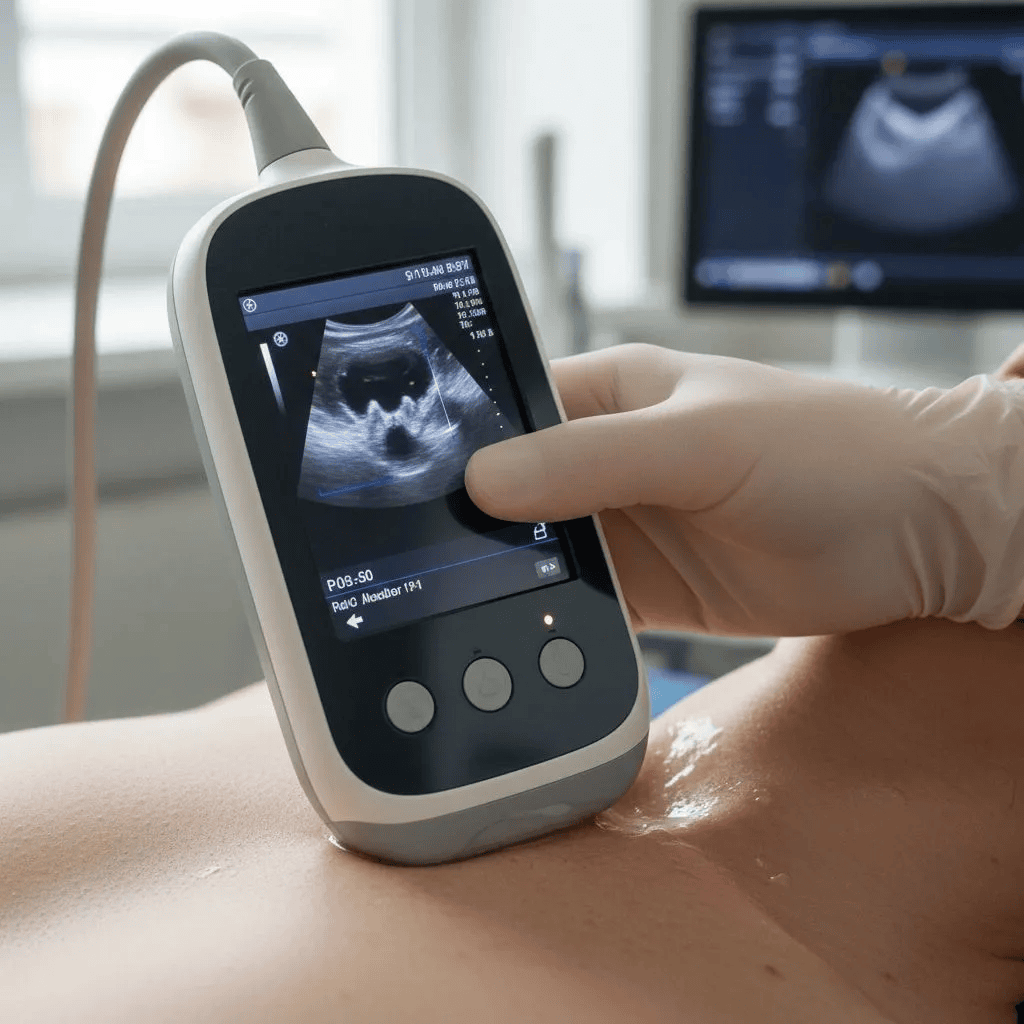
Ethanol ablation is performed in an office or procedure room under ultrasound guidance, under local anesthesia only. The total procedure takes 15 to 20 minutes.
The steps are:
-
Aspiration: A needle is placed into the cyst and the fluid is drawn out, decompressing the cavity.
-
Ethanol injection: Medical-grade ethanol (typically 99% concentration) is injected into the empty cyst cavity. The injected volume is usually small compared to the aspirated fluid volume.
-
Dwell time: The ethanol is left in place for 5 to 10 minutes, depending on the protocol.
-
Ethanol removal: Most protocols then aspirate the ethanol back out, though some leave it in place.
Most patients feel a brief burning sensation when the ethanol enters the cyst. This usually subsides within a minute. Mild neck soreness for 1 to 3 days is common. Most patients resume normal activity immediately.
Outcomes
| Outcome | Approximate Rate |
|---|---|
| Complete or substantial resolution after one session | Approximately 70 to 85% |
| Resolution after two sessions | Approximately 90 to 95% |
| Volume reduction at 6 months | Typically 70 to 90% |
| Complications | Under 1% in experienced hands |
Ethanol Ablation vs. RadioFrequency Ablation (RFA) for Cystic Nodules
For predominantly cystic nodules, ethanol ablation is typically the first-line option. It is simpler, less expensive, and produces excellent results for fluid-dominant nodules. RFA is generally reserved for nodules with a substantial solid component or for cystic nodules that have failed ethanol ablation. Mixed nodules with significant solid tissue may benefit from both procedures used in combination.
When Ethanol Ablation Is Not Right
-
Solid or mostly-solid nodule: Limited efficacy because there is no fluid cavity to inject.
-
Suspicious or malignant cytology: Not appropriate. Surgery is needed for definitive diagnosis and treatment.
-
Substernal cyst: Out of reach or difficult to access safely.
-
Cyst directly adjacent to the recurrent laryngeal nerve: Ethanol leak risk to the nerve.
-
Multinodular thyroid with multiple problem cysts: Surgery may be more efficient.
⚕ Clinical note The most important technical aspect of safe ethanol ablation is making sure the ethanol stays within the cyst cavity. Leakage of ethanol outside the cyst can cause significant inflammation and, rarely, injury to nearby structures. Centers experienced with the procedure use careful injection technique under continuous ultrasound monitoring to confirm containment.
The Bottom Line
Ethanol ablation is an effective, simple, safe treatment for benign recurrent thyroid cysts. Single-session success rates are 70 to 85%, with cumulative success after two sessions of 90 to 95%. The procedure preserves the thyroid, avoids surgery, and is well tolerated. It is appropriate for predominantly cystic nodules confirmed benign on cytology, performed at centers experienced with the procedure.
If you have a benign cystic thyroid nodule that has refilled after aspiration, ask your physician whether ethanol ablation is available locally and whether you are a candidate.
This article is intended for patient education only. It does not constitute medical advice and does not replace a consultation with your physician. Individual patient circumstances and clinical judgment determine the appropriate evaluation and management for every patient.
More from the Options Besides Surgery series



Ready to Talk to a Specialist?
A thyroid specialist can review your specific results, answer your questions, and help you understand exactly what your next steps should be. The ATLAS network connects you with experienced thyroid and parathyroid expert physicians who focus on thyroid disease.
Find a Thyroid Specialist Near You →