
Parathyroid Surgery: What to Expect Before, During, and After
Written by John P. Sabra, MD FACS
Updated May 2026
Educational only. This article is not medical advice. Always consult your physician about your individual situation.
Parathyroid surgery has a cure rate exceeding 95% and most patients go home the same day. For a disease that affects quality of life as significantly as primary hyperparathyroidism, the operation itself is remarkably well-tolerated. Understanding what happens to you before, during, and after surgery removes the unknowns that make any procedure feel more daunting than it needs to be.
Before Surgery: Finding the Overactive Gland
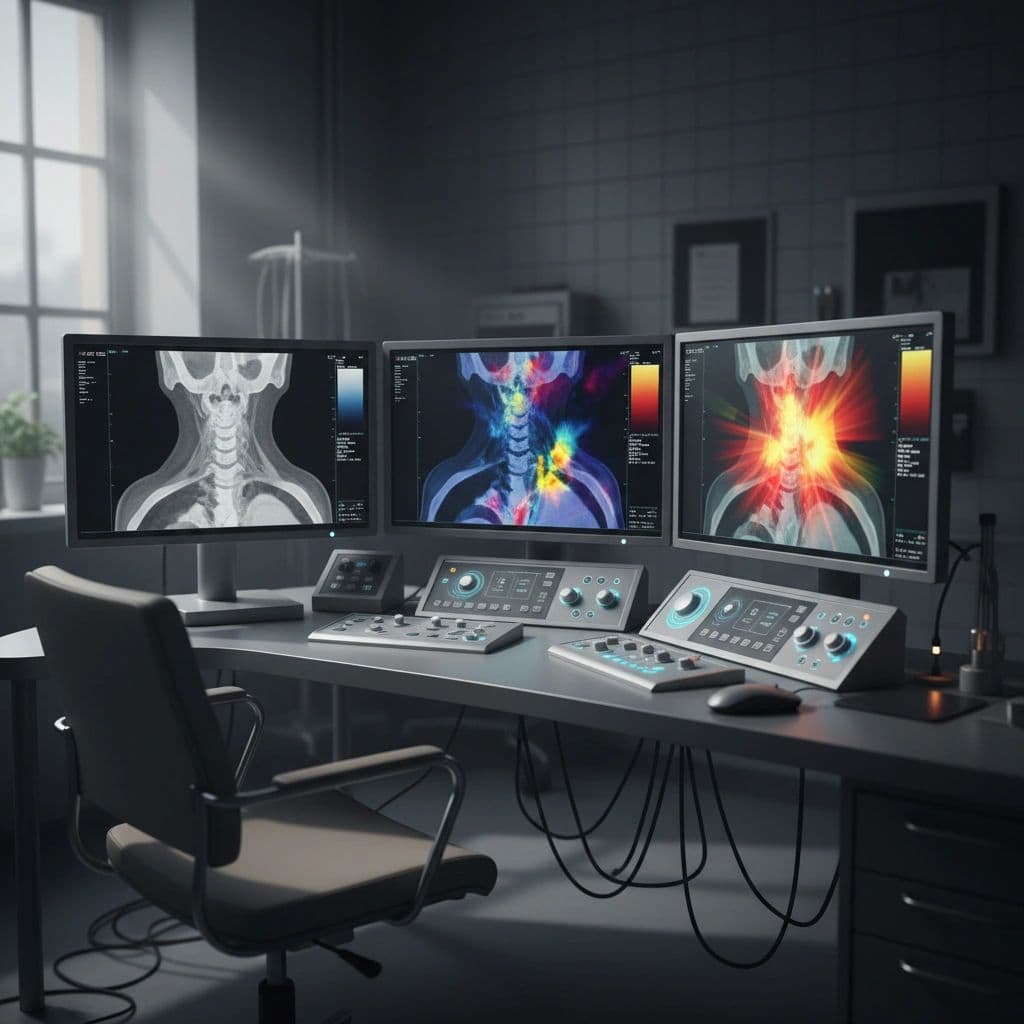
Unlike many surgical procedures, planning parathyroid surgery begins with an imaging phase designed to locate the abnormal gland before the first incision. These studies are called “localization tests”, and they are not used to make the diagnosis, the diagnosis is biochemical (elevated calcium and PTH on blood tests). Localization tests are used to hopefully find the location of the abnormal gland, which helps plan the surgical approach.
The two most commonly used localization studies are:
- Neck ultrasound: a high-frequency ultrasound performed by an experienced operator, looking for an enlarged parathyroid gland adjacent to the thyroid. In experienced hands, the sensitivity of ultrasound is very high.
- Sestamibi scan: a nuclear medicine study in which a small amount of radioactive tracer (technetium-99m sestamibi) is injected and taken up preferentially by overactive parathyroid tissue. The scan identifies which gland is abnormal and, importantly, whether it is in its normal position in the neck or has migrated to an unusual location (ectopic position).
If the ultrasound shows an obviously enlarged and abnormal gland, then that is typically all that an experienced surgeon will need before proceeding with surgery. If the ultrasound is inconclusive, then the Sestamibi is ordered. When both studies point to the same single gland, the surgeon has a high degree of confidence in proceeding with a focused, minimally invasive approach. When the studies are discordant or negative, additional imaging, such as a 4D CT scan or MRI, may be used, or the surgeon may plan a more thorough bilateral exploration.
Negative or non-localizing imaging does not mean surgery cannot be performed or will not succeed. In approximately 10 to 20% of cases, preoperative imaging fails to identify the abnormal gland. In these situations, a surgeon experienced in four-gland exploration — the traditional approach of examining all four parathyroid glands — can still achieve cure rates comparable to focused surgery. Negative imaging is a reason to choose a high-volume parathyroid surgeon, not a reason to delay treatment. “Localizing an experienced surgeon” is the best localization test you can perform!
The Two Surgical Approaches
Focused (Minimally Invasive) Parathyroidectomy
When preoperative imaging clearly identifies a single adenoma, most surgeons perform a focused or minimally invasive parathyroidectomy. Through a small incision, typically less than 2 centimeters, placed in a natural neck skin crease, the surgeon targets the single identified gland and removes it. The remaining three glands are not disturbed.
This approach offers shorter operative time (typically 20 to 30 minutes), a smaller incision, less dissection, and faster recovery. It is the appropriate approach when imaging is straightforward and the clinical picture is consistent with single-gland disease.
Bilateral (Four-Gland) Exploration
When imaging is negative or discordant, when there is clinical suspicion for multi-gland disease (hyperplasia or multiple adenomas), or when the focused approach does not achieve the expected result, the surgeon performs a bilateral exploration, examining both sides of the neck and identifying all four parathyroid glands.
The bilateral exploration is the traditional approach and remains the gold standard for completeness. In experienced hands it achieves cure rates equivalent to focused surgery, and even higher long-term cure rates. It requires a somewhat larger incision and longer operating time, but it remains a minimally invasive operation relative to most neck procedures.
The Most Important Peri-operative Tool: Rapid PTH Testing
The single most important advance in parathyroid surgery over the past three decades is rapid parathyroid hormone monitoring. Because PTH has a very short half-life in the bloodstream, approximately 3 to 4 minutes, a rapid PTH assay drawn 10 minutes or more after removing the suspected abnormal gland can confirm whether the operation is complete. This can be done while still in the operating room, or in the recovery room if the surgeon has a high degree of confidence in the surgical result.
The standard criterion for cure (the “Miami criteria”) is a drop in PTH of greater than 50% from the pre-operative baseline, with the post-excision value falling into the normal range. If PTH does not drop appropriately, the surgeon knows that additional abnormal gland tissue remains.
PTH monitoring is what allows focused parathyroidectomy to be performed safely in the majority of patients. It is the safety net that confirms the correct gland has been removed and that no additional disease has been missed.
Intra- and peri-operative PTH monitoring is standard practice at high-volume parathyroid surgery centers and is essential for focused parathyroidectomy. A surgeon who performs parathyroid surgery without PTH monitoring is relying on visual inspection, anatomical judgment, and experience — which is appropriate when all four glands are examined (bilateral exploration) but can introduce uncertainty in focused cases. Newer technology tools designed to specifically identify parathyroid glands can significantly increase operative success.
The Day of Surgery: What to Expect
Parathyroid surgery is performed under general anesthesia and typically takes 20 minutes to 1 hour depending on the approach and the complexity of the case. Most patients are admitted as outpatient or same-day surgery cases and go home the same day, once their PTH level has been checked and found to return to normal.
Patients are awake and alert within 1 to 2 hours of the procedure ending. Neck soreness, mild swallowing discomfort, and a slight sore throat from the anesthesia tube are the most common immediate post-operative complaints. Most patients eat and drink normally within hours of surgery.
After Surgery: Calcium and Recovery
The most important thing that happens after successful parathyroid surgery is that your calcium level drops, often within hours. After years of elevated calcium, the parathyroid glands that were previously suppressed by the overactive adenoma need time to “wake up” and resume normal function. In the meantime, calcium may drop below normal, causing symptoms of hypocalcemia.
- Tingling or numbness around the mouth, in the fingers, or in the toes is the most common early symptom of low calcium. It is common and manageable, not dangerous if identified and treated promptly.
- Muscle cramps in the hands, feet, or legs may accompany low calcium.
- Hungry bone syndrome: a more significant drop in calcium occurring in patients with severe pre-operative bone disease, as the bones rapidly absorb the calcium that was previously being leached out by excess PTH.
Most patients are sent home with calcium supplements and often vitamin D to take for several weeks after surgery while the remaining parathyroid glands recover. Your surgeon will monitor your calcium in the days and weeks after the operation and adjust supplementation as needed.
Mild tingling and numbness after parathyroid surgery can be expected. It does not mean something went wrong. It means your calcium dropped after the overactive gland was removed — which is exactly what is supposed to happen. Take your calcium supplements as directed, stay hydrated, and contact your surgical team if symptoms worsen significantly or if you develop muscle spasms that do not resolve with supplementation. Most patients’s calcium normalizes within weeks to months as the remaining parathyroid glands resume full function.
Recovery Timeline
| Timeframe | What to Expect |
|---|---|
| Day of surgery | Procedure complete, PTH checked, discharge home with calcium supplements |
| Days 1 to 3 | Neck soreness, mild fatigue, possible tingling if calcium is dropping. Most patients can resume desk work and light activity. |
| Week 1 to 2 | Soreness resolves, energy beginning to improve. Avoid strenuous exercise and heavy lifting. |
| 4 to 6 weeks post-op | Post-operative blood draw to check calcium, PTH, and vitamin D. Supplementation adjusted. |
| 3 to 6 months | Most patients report significant improvement in energy, sleep, mood, and cognitive clarity. Bone density testing typically repeated at 1 year. |
| 1 year | Bone density improvement is measurable. Long-term cure confirmed if calcium remains normal. |
The Bottom Line
Parathyroid surgery is one of the most successful operations in endocrine surgery, a cure rate exceeding 95%, same-day discharge for most patients, and outcomes that meaningfully improve quality of life. The operation is well-tolerated, the recovery is faster than most patients expect, and the benefits, in energy, cognitive clarity, bone health, and kidney stone risk, are real and lasting.
The most important decision you will make around parathyroid surgery is not whether to have it, but who performs it. That question is covered in the next article in this series.
References
- Wilhelm SM, et al. AAES Guidelines for the Definitive Management of Primary Hyperparathyroidism. JAMA Surg. 2016.
- NIH NIDDK — Primary Hyperparathyroidism.
- American Association of Endocrine Surgeons — Patient Resources.
This article was written by John P. Sabra, MD FACS and is intended for patient education only. It does not constitute medical advice and does not replace a consultation with your physician. Individual patient circumstances, comorbidities, and clinical judgment determine the appropriate surgical approach for every patient.
More from the Parathyroid Disease series


Ready to Talk to a Specialist?
A thyroid specialist can review your specific results, answer your questions, and help you understand exactly what your next steps should be. The ATLAS network connects you with experienced thyroid and parathyroid expert physicians who focus on thyroid disease.
Find a Thyroid Specialist Near You →